About Orsat Gas Analysis Apparatus
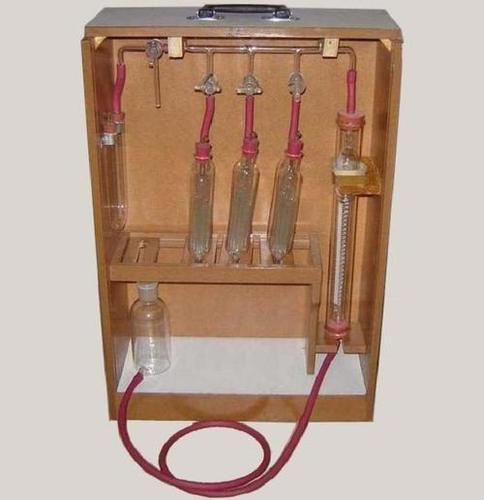
One platinum electrode combustion pipettes with hosts to use on 220 volts AC, two levelling bottles, 100ml gas burette with jacket and manifold tube with PTFE key stopcocks. All components in a wooden cabinet with sliding doors. Chemical to be arranged by the user.
DDRI 173A : 3 Test Set Apparatus
DDRI 173B : 4 Test Set Apparatus.
Efficient and Precise Gas MeasurementThe Orsat Gas Analysis Apparatus provides quick, accurate determination of CO, O, and CO levels in gas mixtures. Its visual, manual control and graduated burette allow precise volume measurements. Suitable for industries and labs, its robust borosilicate glass construction and chemical-resistant components ensure repeatable results, even under demanding conditions.
Simple and Safe OperationDesigned for hands-on use, this apparatus features easy-to-read graduations and an intuitive sample inlet with a secure rubber tubing connection. Safety is paramount: always wear protective gloves and eyewear during operation. Cleaning is straightforwardsimply rinse the glassware with distilled water for reliable, long-lasting performance.
Adaptable and Low-Maintenance DesignWith serviceable parts and a non-electric, portable build, the Orsat Apparatus offers flexibility and longevity. Components are easily replaced, making upkeep straightforward. There is no shelf life limit when you follow the recommended care protocol, assuring dependable operation for years to come.
FAQs of Orsat Gas Analysis Apparatus:
Q: How is the Orsat Gas Analysis Apparatus used for gas measurement?
A: The apparatus is used by manually introducing a 50100 mL gas sample into the burette, then sequentially passing the sample through absorbent solutions (potassium hydroxide for CO, pyrogallol for O, and ammoniacal cuprous chloride for CO). Changes in burette volume, marked in 1 mL divisions, indicate the concentration of each analyte gas.
Q: What safety precautions should be taken during operation?
A: Operators must use protective gloves and eyewear while handling the Orsat Apparatus and the chemical absorbent solutions. The device works with non-pressurized, ambient gas samples and uses chemical reagents, so safety gear is essential to prevent direct contact and inhalation of reagents.
Q: When should the apparatus be cleaned, and how is it done?
A: The Orsat glassware should be rinsed with distilled water after each analysis to remove any residual chemicals and maintain measurement accuracy. Occasional deep cleaning and inspection of glassware integrity are recommended for consistent, safe operation.
Q: Where can the Orsat Apparatus be applied?
A: This apparatus is suited for laboratory and onsite industrial gas analysis. It is specifically useful for analyzing gas mixtures from industrial stacks, flue gases, and laboratory gas samples, supporting applications in research, environmental monitoring, and process control.
Q: What is the benefit of using borosilicate glass and replaceable parts?
A: Borosilicate glass offers excellent chemical resistance, preventing contamination and ensuring durability. Replaceable parts allow for easy maintenance and long-term serviceability, reducing downtime and operational costs compared to single-use or non-serviceable alternatives.
Q: How portable is the Orsat Apparatus, and does it require a power supply?
A: With a weight of approximately 3.5 kg and a bench-top mounting design, the apparatus is easily portable between locations. It operates manually without the need for any electrical power, making it suitable for field as well as laboratory use.

 Send Inquiry



 Send Inquiry

 Send Inquiry