About Softening Point Apparatus
SOFTENING POINT APPARATUS
(Ring Ball Apparatus)
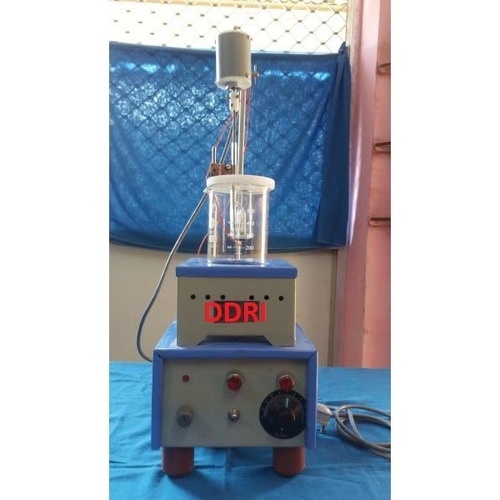
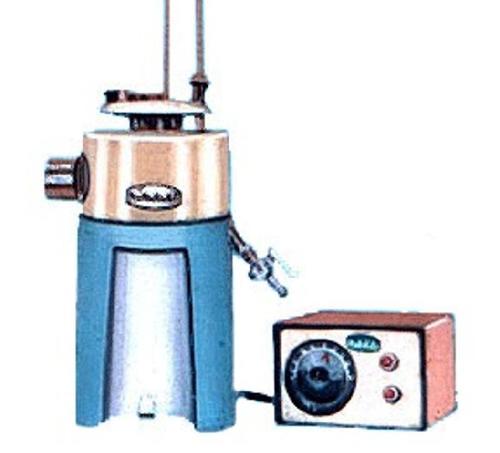
For determination of softening point of bituminious materials according to IP 58 and IS 1205-1958. Softening point is that temperature at which the speciman under test becomes soft enough to allow a steel ball of specific dimensions to fall a required distance under test condition. The apparatus consists of glass beaker, ring Stand, two steel balls with rings and ball guides, hand Stirrer.
DDRI 161 - Softening Point Apparatus (without Glass Beaker)
DDRI 162 - Softenting Point Apparatus with glass Beaker
DDI 163 A - Softening Point Apparatus with F.H.P. elect.motor driven Stirrer and electric heater with Energy. Regulator Control.
DDRI 163 B - ---Same as Above--- with DIGITAL TEMP. CONTROLLER UNIT
OPTIONAL ACCESSORIES.
DDRI 161 a - Thermometer IP 60C
DDRI 161 b - Thermometer IP 61 C
DDRI 161 c - Spare Ring with Ball-Centring Guide and Steel Ball (pack of 2)
Precision in Softening Point DeterminationEngineered for accuracy and reliability, the Softening Point Apparatus utilizes borosilicate glass and steel components to withstand high temperatures up to 250C. Its precise ball-and-ring mechanism, combined with dual specimen capability, facilitates consistent softening point measurement for bituminous materials. This apparatus is ideal for laboratory professionals seeking dependable performance in quality control and research applications.
Comprehensive Accessories for Enhanced UsabilityThe apparatus comes complete with necessary accessoriesball centering guides, thermometer holder, support assembly, and steel ballsto streamline the softening point test process. Each component is ergonomically designed for ease of setup, specimen placement, and result accuracy, supporting efficient workflows in laboratory environments.
Manual Control for Greater Experimentation FlexibilityFully manual operation allows users to control the heating process according to their specific testing requirements. This hands-on approach is ideal for laboratories that value direct supervision, accuracy, and procedural adaptation. The analog/glass thermometer ensures clear and immediate temperature readings throughout the experiment.
FAQs of Softening Point Apparatus:
Q: How is the Softening Point Apparatus used to test bitumen?
A: The apparatus determines the softening point of bituminous materials by heating the specimen placed in a test ring within a borosilicate glass bath. A steel ball is positioned above the sample, and as the bath temperature rises, the point at which the bitumen softens and allows the ball to drop is recorded with an accurate thermometer.
Q: What are the benefits of using borosilicate glass and steel in this apparatus?
A: Borosilicate glass is highly resistant to thermal shock and chemical reactions, ensuring a stable bath environment. The steel components, such as balls and support structure, provide durability and maintain sample integrity during repeated heating cycles, extending the life span of the instrument.
Q: When should I use this apparatus in laboratory settings?
A: This apparatus is essential whenever the softening point of bitumen or asphalt must be established, such as during quality control, formulation of new materials, or specification compliance checks in laboratory environments.
Q: Where should the Softening Point Apparatus be installed for best results?
A: It is designed for bench-top installation in a laboratory. Ensure the workspace is stable and near a 230V AC, 50Hz power supply. Adequate ventilation and safety measures should be observed due to the heating process.
Q: What is the process for calibrating or verifying accuracy?
A: Accuracy can be verified using reference materials with known softening points. Regularly inspect and clean the bath, rings, and balls. Ensure the thermometer is calibrated and functional before each test for reliable 1C measurement precision.
Q: Can I test two specimens simultaneously with this apparatus?
A: Yes, the design includes dual test rings, allowing the simultaneous measurement of two specimens. This enhances efficiency and comparative analysis in laboratory workflows.

 Send Inquiry



 Send Inquiry

 Send Inquiry