About FLOW CUP VISCOMETER
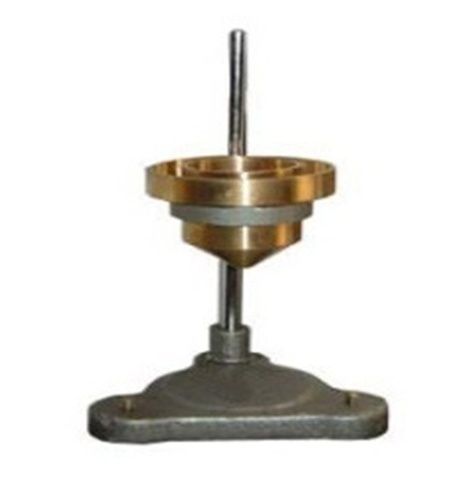
This type of cups has been in popular use for many years and confirms to IS 3944-1965 specifications. These are available in following Size.
Jet No. B-1, B-2, B-3, B-4, B-5 & B-6.
DDRI 119 Flow cup viscometer with stand and screws.
DDRI 119 A Spare brass cup with any size Jet.
Reliable Viscosity MeasurementEngineered for precision, the FLOW CUP VISCOMETER offers dependable viscosity measurement across a broad range of fluids. Its interchangeable precision jets and cup sizes provide flexibility, while conformance to international standards ensures consistency and comparability.
Practical and User-Friendly DesignConstructed with anodized aluminum or stainless steel, this cup is lightweight, corrosion-resistant, and designed for easy cleaning. The engraved cup markings offer fast identification, while the stand and leveling bubble simplify setup, ensuring accurate, repeatable results.
Laboratory and Industrial SuitabilityPerfect for laboratory or industrial use, the viscometer requires no electrical supply, making it portable and convenient. Its manual control mode and cup variants allow for the measurement of a diverse range of viscosities, tailored to your application.
FAQs of FLOW CUP VISCOMETER:
Q: How do I use the FLOW CUP VISCOMETER to measure viscosity?
A: To measure viscosity, pour at least 100 ml of your liquid sample into the selected cup, ensuring the viscometer is leveled using the supplied stand and bubble. Release the flow and use a stopwatch to time the liquid as it exits the orifice. The flow time, combined with the cup type, gives the viscosity in cSt.
Q: What types of fluids can be tested with this viscometer?
A: The FLOW CUP VISCOMETER is designed for paints, inks, varnishes, and other Newtonian or near-Newtonian fluids. The measuring range (typically 151800 cSt, depending on cup size) accommodates a wide variety of viscosity levels.
Q: When should I use a Ford, BS, ISO, or DIN cup?
A: Choose the cup type based on the standard applicable to your industry or testing protocol (e.g., Ford for ASTM D1200, ISO for ISO 2431). Each cup type offers specific orifice dimensions and calibration suited to particular standards and applications.
Q: Where can the FLOW CUP VISCOMETER be used?
A: This viscometer is intended for laboratory or controlled industrial environments. It is best suited for use at ambient room temperatures and standard laboratory humidity conditions.
Q: What is the process for cleaning the viscometer after use?
A: After each measurement, rinse the cup, jets, and accessories thoroughly with a compatible solvent and allow them to dry. The easy-clean design and corrosion-resistant materials facilitate fast, effective cleaning and minimize contamination risks.
Q: What are the benefits of using a manual, non-electrical viscometer?
A: A manual viscometer requires no power supply, making it portable and suitable for varied testing environments. Its simplicity enhances reliability while reducing maintenance, making it ideal for routine viscosity checks.
Q: Can the viscometer be handheld or must it use the stand?
A: The FLOW CUP VISCOMETER can be used handheld for rapid checks, but for precise and repeatable results, mounting it on the supplied stand and ensuring it is level is recommended.

 Send Inquiry



 Send Inquiry

 Send Inquiry