About Penetrometer Apparatus
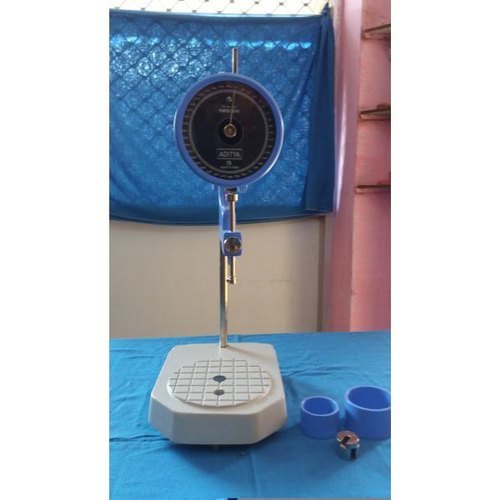
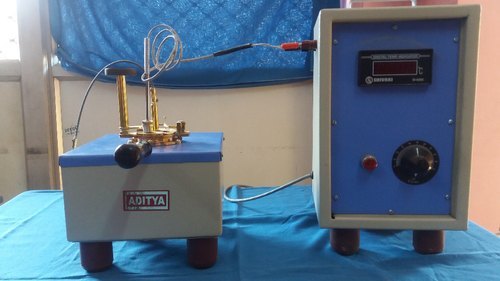
ENETROMETER APPARATUS[ As per IP 49, 50 & 167 specifications and also per IS 1448 (P: 60) & (P: 93)]DDRI 137 - Penetrometer with containers and weights having peneteration Needle. (Bitumen)DDRI 138 A - Penetrometer Apparatus with containers and weights having peneteration CONE HOLLOW type (Grease)DDRI 138 B - -Same as above - but with Geared arrangement for moving the arm with geared unitDDRI 139 A - Penetrometer with Brass Cone & Needle With DIGITAL TIMMER DEVICE (Adjustable)DDRI 139 B - --- Same as above --- but with Geared arrangement for moving the arm with geared unitOPTIONAL ACCESSORIES:DDRI 137 a - Spare penetration Needle (Pack of Two)DDRI 137 b - Spare penetration solid coneDDRI 137 c - Spare penetration Brass hollow conePrecision Consistency TestingEngineered for accurate penetration measurement, the Penetrometer Apparatus enables laboratories to determine the consistency of bituminous, grease, soil, wax, and food samples. With a measuring range of 0400 (1/10 mm) and an accuracy of 1 unit, it ensures data reliability across various material types.
Robust and Adaptable ConstructionThe apparatus features a corrosion-resistant base and a powder-coated stand, making it suitable for rigorous laboratory use. Compatible with interchangeable needles and cup sizes, it addresses multiple testing requirements while supporting test strokes from 0 to 47 mm.
Efficient and User-Friendly OperationThanks to a quick-release mechanism and variable-speed control up to 50 mm/min, the apparatus streamlines the penetration test process. Manual and optional digital interfaces offer flexibility, while included accessories support enhanced testing precision and ease of use.
FAQs of Penetrometer Apparatus:
Q: How is the Penetrometer Apparatus used in laboratory settings?
A: This device is typically used to measure the penetration of standardized needles into samples like bituminous materials, wax, or soil. The sample is placed in a stainless steel cup, the plunger is positioned and released using the quick-release knob, and the penetration depth is read on the digital or analog display. Results contribute to assessing material consistency.
Q: What types of materials can be tested with this Penetrometer Apparatus?
A: The apparatus is designed to test bitumen, grease, wax, soil, and certain food products. Its versatility across different substances makes it suitable for laboratories in road construction, petrochemical, industrial, and food sectors.
Q: When should additional weights be used with the plunger?
A: Additional weights are applied to increase testing force when specified by test standards or to accommodate particular material resistance. Weight selection ensures accurate simulation of application conditions relevant to the material under study.
Q: Where should the Penetrometer be installed for optimal use?
A: For safety and consistent results, the apparatus should be placed on a stable, level bench-top in laboratory environments where ambient humidity and temperatures range from 5C to 40C. Proper installation helps maintain accuracy and user safety.
Q: What is the process for performing a standard penetration test using this apparatus?
A: Prepare the sample in a standard cup, position the needle above the sample, set the desired weight and zero the scale, then release the plunger using the quick-release knob. The penetration depth is measured after a specific time, often with the included release timer, according to relevant testing standards.
Q: How does this apparatus benefit routine laboratory testing?
A: Its sturdy construction, corrosion-resistant coating, and interchangeable components ensure long-term reliability and adaptability. Rapid response times and both manual and optional digital controls simplify operation, enhancing productivity in material quality assessment.

 Send Inquiry



 Send Inquiry

 Send Inquiry