About Coriolis Component Of Acceleration
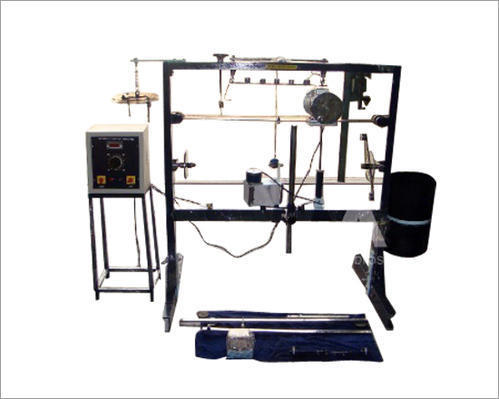
This set up is designed to study Coriolis
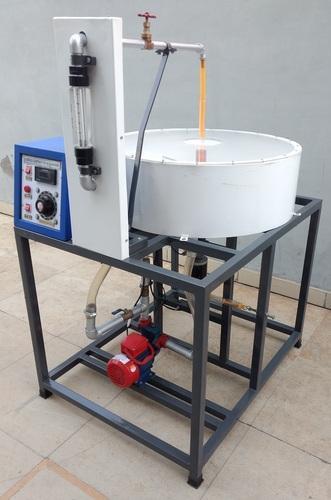
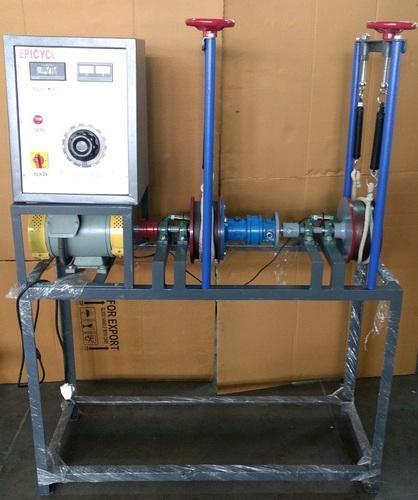
component of Acceleration of a slider crank Mechanism. The apparatus uses a hydraulic analogy to represent the rotating slider. It consists of a rotating block with two arms in the opposite direction. These tubes can be rotated at various speeds by using a swinging field motor, which also acts as a dynamometer to measure the torque applied to rotate tubes. A Perspex window on top cover helps to visualize the process. Rotameter is used to measure water flow rate through tubes. Water is circulated by a small monoblock
pump.Robust and Practical DesignEngineered for institutional use, the CC-01 features a corrosion-resistant steel base ensuring longevity and consistent performance. The setups steady mounting base and splash guard prioritize safety while maintaining ease of operation.
Educational ApplicationsTailored for fluid mechanics laboratories, this apparatus vividly demonstrates the Coriolis acceleration, supporting both theoretical and practical learning. Its analog display and manual or optional electric operation make it accessible for students and instructors alike.
Simple, Manual OperationThe manual hand crank mechanism allows users to precisely control rotational speed for different demonstrations. The included instruction manual ensures straightforward setup and operation, making demonstrations efficient and effective in teaching environments.
FAQs of Coriolis Component Of Acceleration:
Q: How does the Coriolis Component of Acceleration Apparatus work?
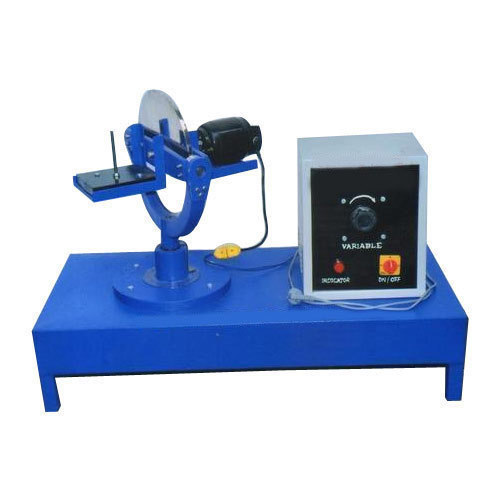
A: The apparatus demonstrates Coriolis acceleration by rotating a disc equipped with a water jet and analyzing the deflection of the jet due to disk rotation. Fluid is supplied via an attached hose, and the hand-operated (or optional motorized) mechanism provides rotational motion.
Q: What is the benefit of using this apparatus in a laboratory setting?
A: This equipment helps students visualize and understand the Coriolis effect through hands-on experiments, bridging the gap between theoretical concepts and real-world applications, thereby enhancing their grasp of fluid mechanics principles.
Q: When should I use the manual option versus the optional motorized version?
A: Use the manual operation for straightforward, controlled demonstrations and when electric supply is unavailable. The optional motorized version is ideal for repetitive tasks or when higher rotational speeds are needed for advanced demonstrations.
Q: Where can the apparatus be installed, and what are the mounting requirements?
A: The apparatus is designed as a tabletop unit suitable for laboratory benches. Its steady base ensures stable operation on flat surfaces, requiring only minimal bench space for installation.
Q: What is the process for demonstrating the Coriolis effect using this equipment?
A: Fill the systems tank, connect the water supply, and use the hand crank (or motor) to rotate the disc. As water jets from the nozzle, the deflection can be observed and measured, illustrating the Coriolis effect at various disc speeds.
Q: How does the durability of the equipment contribute to its performance?
A: Constructed from powder-coated mild steel with stainless steel components, the apparatus is resistant to corrosion and wear, ensuring reliable demonstrations over extended periods in educational environments.
Q: What service support is available for this apparatus in India?
A: Service support, including assistance with setup, maintenance, and repairs, is available upon request through the distributor, exporter, importer, or service provider based in India.

 Send Inquiry



 Send Inquiry

 Send Inquiry