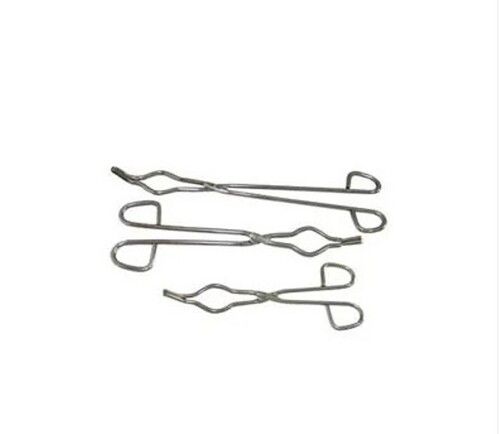
About Crucible Tong For Physics Lab
Crucible Tong:
| Cat. No. | Size(Inches) | Type | Price |
DDRI-263 | 6 | StainlessSteel | 48.00 |
DDRI-263-A | 6 | MildSteel | 37.00 |
DDRI-263-B | 8 | StainlessSteel | 65.00 |
DDRI-263-C | 8 | MildSteel | 45.00 |
DDRI-263-D | 8 | StainlessSteel Heavy | 95.00 |
DDRI-263-E | 8 | MildSteel Heavy | 55.00 |
DDRI-263-F | 10 | StainlessSteel | 110.00 |
DDRI-263-G | 10 | MildSteel | 80.00 |
Superior Grip and DurabilityThe Crucible Tong's flat or serrated jaws are engineered to securely grasp a range of crucible sizes (typically small to medium). Constructed with robust materials such as mild steel or stainless steel, the tong provides both longevity and resilience against corrosive laboratory environments. Optional insulated grips further enhance safety during high-temperature operations.
Versatile Laboratory ApplicationDesigned to accommodate the rigorous demands of physics, chemistry, and general lab settings, these tongs are indispensable for handling heated crucibles and other vessels. Their varying lengths allow users to maintain a safe working distance from heat sources, minimizing the risk of burns or accidents during experiments.
Safety and Easy MaintenanceThese crucible tongs are heat resistant up to 1000C, making them suitable for high-temperature applications. For enhanced laboratory hygiene, stainless steel models are autoclavable, supporting effective sterilization between uses. This ensures compliance with laboratory safety standards and extends the tong's service life.
FAQ's of Crucible Tong For Physics Lab:
Q: How do I choose between flat and serrated jaws for crucible tongs?
A: Flat jaws are suitable for standard crucible shapes, providing a broad contact surface, while serrated jaws offer an even more secure grip, especially for irregular or smooth crucibles. Select the jaw type based on the texture and stability requirements of your specific laboratory work.
Q: What benefits do insulated grips provide compared to bare metal handles?
A: Insulated grips enhance user safety by reducing the risk of heat transfer to the hand, making them ideal for prolonged or high-temperature usage. Bare metal handles, however, are suitable for quick tasks or when insulation is less critical. Choose based on the expected frequency and duration of use.
Q: When should I select stainless steel tongs over mild steel models?
A: Stainless steel tongs are preferred for applications requiring high durability, corrosion resistance, and sterilizability via autoclave methods. Mild steel is suitable for general use where intensive sterilization or corrosive exposure is not a concern.
Q: Where can crucible tongs be used outside of standard laboratory settings?
A: While mainly intended for use in physics and chemistry laboratories, crucible tongs are also useful in industrial labs, educational settings, and even workshops for handling heated vessels, making them a flexible tool across disciplines.
Q: What process should I follow for sterilizing stainless steel crucible tongs?
A: Stainless steel tongs can be sterilized using standard autoclave procedures. Clean them with mild detergent, rinse thoroughly, and place in the autoclave for sterilization, adhering to your laboratory's protocols for temperature and duration.
Q: How do the different handle lengths impact usage and safety?
A: Longer handle lengths (8-12 inches) provide greater distance from the heat source, reducing burn risk, while shorter handles (6 inches) offer greater control for precise tasks. Select a length suited to your laboratory's heating apparatus and safety preferences.

 Send Inquiry




 Send Inquiry

 Send Inquiry