About K Constant Spring For Physics Lab
Consist with spiral spring, one vertical meter scale,on aspring hanging with a weight,fitted on a heavy Cast IronBase.
|
Cat. No.
|
Size (Inches)
|
Price
|
|
DDRI-291
|
130
|
ON REQ
|
|
DDRI-291-A
|
124
|
ON REQ
|
High-Precision MeasurementAchieve accurate results in spring constant determination and Hooke's Law verification. The device offers impressive measurement accuracy of 0.05 N and supports up to 2 kg loads, making it reliable for complex lab experiments and repeated use.
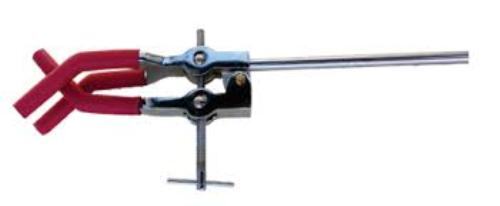
Durable & User-Friendly DesignBuilt with spring steel and a corrosion-resistant metal frame, the apparatus ensures longevity and consistent performance. Its mechanical scale display is easy to read, and the bench clamp enables quick, stable mounting on laboratory benches.
Versatile Laboratory ApplicationSuitable for various physics lab setups, the K Constant Spring is ideal for educational demonstrations and research experiments. Its compact dimensions and foam-padded packaging make storage and transport convenient, while the manual operation prevents dependency on external power supplies.
FAQ's of K Constant Spring For Physics Lab:
Q: How is the K Constant Spring used in a physics laboratory experiment?
A: It is mounted using the bench clamp on a lab bench. Loads are incrementally hung on the spring's hook, and the corresponding extension is measured with the mechanical scale. This allows students and researchers to verify Hooke's Law and calculate the spring constant.
Q: What is the spring constant range for this apparatus?
A: The spring constant range typically varies between 10-50 N/m, depending on the specific spring provided with the apparatus.
Q: When should I use the K Constant Spring for experiments?
A: This device is ideal for use during practical physics lessons or experiments that require the verification of Hooke's Law, determination of spring constants, or the study of elastic behavior of materials up to 2 kg load.
Q: Where can the K Constant Spring be installed?
A: It is designed for easy installation on any standard laboratory bench using the provided bench clamp, ensuring stability and safety during measurements.
Q: What process does the apparatus follow to determine the spring constant?
A: Loads are progressively added to the spring, and the elongation is recorded each time. Plotting force against extension on a graph, the slope gives the spring constant value, following the principle explained by Hooke's Law.
Q: Is the apparatus suitable for educational institutions in India?
A: Yes, the K Constant Spring is distributed, exported, and serviced in India, making it accessible for schools, colleges, and research institutions across the country.
Q: What are the key benefits of using this device in laboratory experiments?
A: The main benefits include high precision, easy mounting, durability due to corrosion resistance, and manual operation that ensures independence from power sources. These features make it a reliable tool for repeated scientific investigations.

 Send Inquiry






 Send Inquiry

 Send Inquiry