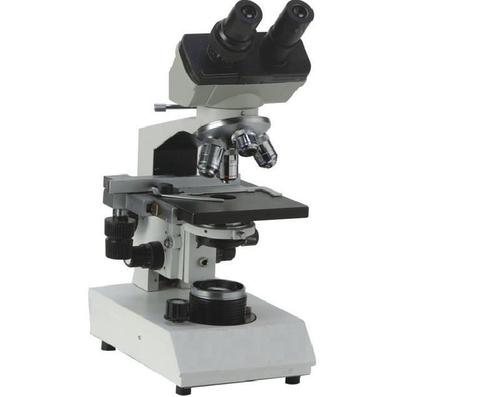
About Binocular Research Microscope
Stand : Rigid & Heavy single mold aluminum die-cast stand. Observation Head : BINOCULAR head inclined at 45o and rotatable in 360o fitted with highest quality prism to ensure highly accurate collimation for stain free observation. Eyepiece : KEOWA H6x and HKW 10x (paired) focusable, lockable, anti-fungal eyepieces with foldable eyeguards. Nosepiece : QUADRUPLE ball bearing revolving nose piece with POSITIVE click stop & rubber grip. Objectives : KEOWA Achromatic objectives 4x/NA 0.10, 10x/NA 0.25, 40x/NA 0.65(SL) and 100x/NA 1.25(SL) Oil imm. Stage : RECTANGULAR stage of size 120x140mm with graduated low positioned co-axial controls for X & Y movement. Focusing : SEPARATE coarse and highly sensitive graduated fine focusing knobs reading upto 0.002mm and Slide Safety topper. Condenser : Substage condenser NA 1.25 fitted with iris diaphragm and swing out filter holder with blue filter moving up and down through rack and pinion mechanism. Illumination : Halogen 6V-20W illumination with central knobs for LOW/MED./ HIGH illumination. Upto 2,000 hours of Halogen Lamp life. Universal input 100V - 240V AC, 50/60Hz. Packaging contents : Packed in shockproof Styrofoam molded box or in a plywood cabinet having provision for placing eyepieces, objectives. Nylon Dust cover. Detachable power cord and 3 pin-plug. Accessories (optional) Dark field and phase contrast kits. Warranty Information 2 Years parts. 3 years KEOWA optics.
Advanced Optical Performance for Precise ResearchEquipped with DIN standard achromatic objectives (4x, 10x, 40x SL, 100x SL oil), this microscope ensures crisp and accurate imaging up to 1000x magnification. The optical system is complemented by a wide field 10x eyepiece and an Abbe condenser (N.A. 1.25) with built-in filter and iris diaphragm, ideal for detailed transmitted-light studies and extended observation sessions.
User-Centric Ergonomics and DurabilityConstructed from a robust, corrosion-resistant alloy, this microscope promises stable, vibration-free operation. The 45 inclined binocular head, adjustable interpupillary distance, and rubber eye-guards guarantee user comfort. Anti-fungal optics and a supplied dust cover ensure consistent optical quality and easy maintenance over years of use.
Versatile Stage and Focusing MechanismA spacious 120mm x 120mm mechanical stage with coaxial X-Y controls and stainless steel spring-loaded clips enables secure and smooth slide navigation. The coaxial coarse and fine focus system, with a fine adjustment precision of 0.002 mm, ensures sharp imaging at every magnification level.
FAQs of Binocular Research Microscope:
Q: How do I adjust the focus on this binocular research microscope?
A: This microscope features coaxial coarse and fine focusing knobs. Use the coarse knob for general alignment, then fine-tune the image with the fine adjustment, offering a precision of 0.002 mm per interval for clear, sharp results at any magnification.
Q: What is the process for changing objectives on the nosepiece?
A: The quadruple revolving nosepiece is designed with positive click stops for secure alignment. Gently rotate the nosepiece until the desired objective lens clicks into place, ensuring accurate alignment and seamless magnification changes during observation.
Q: When should I use the oil immersion lens?
A: The 100x SL oil immersion objective is ideal for examining fine details, such as cellular structures, at the highest magnification. Apply immersion oil to the slide before rotating the lens into place to achieve maximum resolution and clarity.
Q: Where can I install a camera attachment if I require digital imaging?
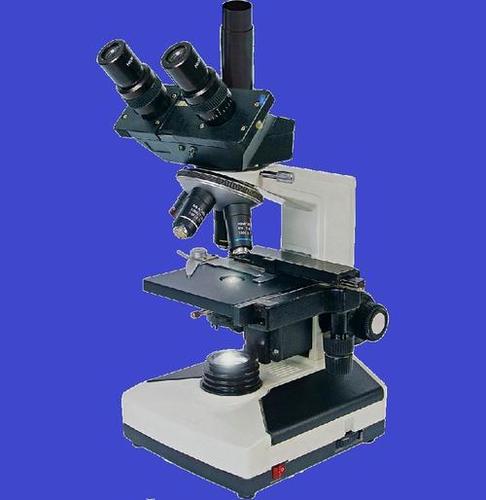
A: While digital sensors are not integrated, the microscope includes an optional camera attachment port. Simply fit a compatible camera to this port to capture still images or videos, expanding the microscopes capabilities for documentation or sharing.
Q: How does the built-in illumination system benefit my research?
A: The adjustable LED or tungsten halogen lamp, combined with an Abbe condenser and iris diaphragm, provides powerful, even illumination across all magnifications. This allows for accurate visualization of samples while minimizing glare and eye strain during extended use.
Q: What maintenance is required to keep the microscope in optimal condition?
A: To ensure longevity, keep the unit covered with the supplied dust cover when not in use, clean lenses with proper optical tissue, and occasionally check and replace spare parts such as bulbs or stage clips. The anti-fungal optics and corrosion-resistant frame contribute to long-term reliability.

 Send Inquiry



 Send Inquiry

 Send Inquiry