
Call: 07971550048
 Send Inquiry
Complete Ductingmade of PC or Acrylic to visualise and identify the components in working
Mixing dampers:Mixing dampers with electrical actuator and position indication. The systemincludes 3 dampers : outdoor air, mixing air and exhaust air
Total Equipment isskid mounted in SS 40 x40 Frame Structure with Castor wheels. All wetted partsalso made of SS-304
Total Equipment isskid mounted in SS 40 x40 Frame Structure with Castor wheels. All wetted partsalso made of SS-304
Compressor: -Hermetically sealed compressor having cooling capacity of (1 ton) Emerson orEquivalent.
Condenser: Air cooledcondenser made up of copper pipe & Aluminum fins of matching capacity withfan cooling. FHP fan motor with fan blade is provided. Storage room: - 100 mm X800 mm X 1000 mm Storage room with double wall insulated with suitable smalldoor. Evaporator: - Air passed Evaporator made of copper pipe and aluminumsfins of matching capacity with fan cooling.
Expansion device:
Capillary Tube
Diameter: suitable;Material: copper
Rota meter: Formeasuring flow rate of liquid refrigerant.
Capacity: 0 to 100LPH.
Pressure Gauges:
0 to 500 PSI (R-22);Compound Gauge -30 to 150 PSI (R-22)
HP/LP cut-out:Danfoss or equivalent. Refrigerants: Primary R-22 gas.
Service valve: 1 no.Brass type.
Filter / Drier: 1nos. Danfoss or equivalent make.
Thermostat: Ranco makeor equivalent
Single phase 230 VAC, 15 Amp supply Touch screen based Fully automatic system with passwordprotection
Data acquisitionshould be Remotely operated by Smart phone, Tablets, PC, laptops via Ethernetand Wi-fi
Should be equippedwith all safety protections Flow visualization should be available in the DAQSystem
Should be equippedwith both manual and auto operation Power consumption of individual system, allsensors data should be display and logged automatically System should have softwarefor operating, data logging, processing and data displaying Performancevariables (e.g., Heating/Cooling COP, Heating / Cooling load etc..) should beautomatically calculated and displayed and should be stored in pen drive alsoalong with PC.
Instruments shouldbe provided with 3D drawing of complete equipment along with the name and makeof all standard components used in the test rig
Each rig should have small aestheticallyappealing poster with schematic diagram and basic working detail.

Price:
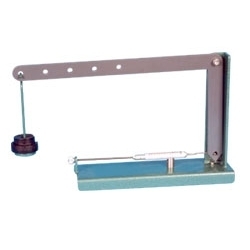
Price 1950 INR / Piece
Minimum Order Quantity : 1 Piece
Control Mode : Manual
Capacity : Up to 5 kg force
Temperature : 10C to +60C
Power Supply : Not Required (Manual Operation)
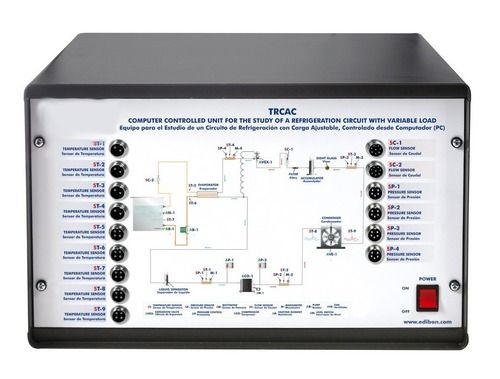
Price 353646 INR / Piece
Minimum Order Quantity : 01 Piece
Control Mode : Computerized, PLC based automatic control
Capacity : 1/4 HP to 1/2 HP compressor, 250500 W cooling
Temperature : 0C to 50C (ambient), 20C to 20C (test chamber)
Power Supply : 230 V AC, 50 Hz
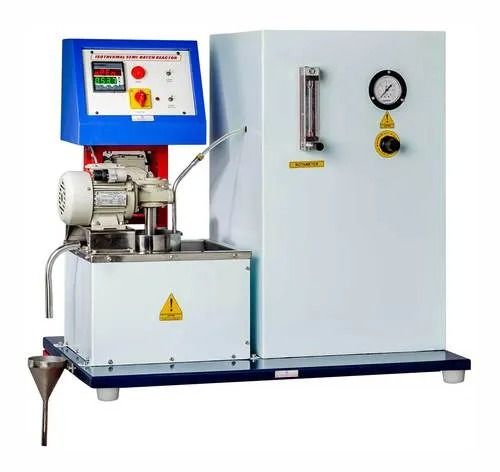
Price 159999.0 INR / Unit
Minimum Order Quantity : 1 Unit
Control Mode : Digital PID temperature controller
Capacity : 3 Liters max
Temperature : Ambient to 150C (adjustable)
Power Supply : 230 V AC, 50 Hz
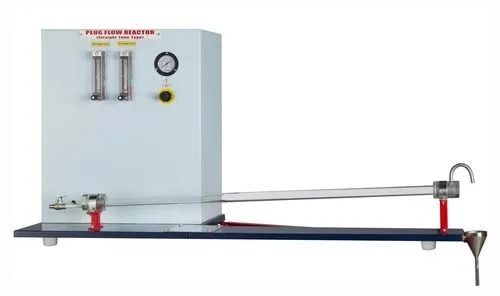
Price 160000.0 INR / Unit
Minimum Order Quantity : 1 Unit
Control Mode : Manual / Digital Control Panel
Capacity : 75 ml (tube volume approx.)
Temperature : Ambient to 100C (depends on jacket/fluid)
Power Supply : 220 V AC, 50 Hz
GST : 06BBQPS9049P2ZF


 Send Inquiry

 Send Inquiry