About Katers Pendulum For Physics Lab
Katers Pendulum:
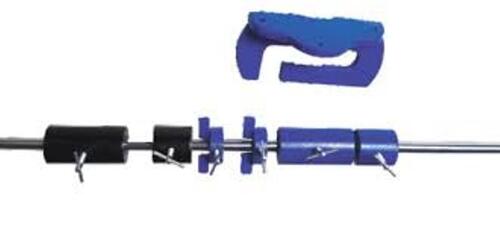
consist of a rod of 120 cm long 10 cm. dia with two adjustable knife edges. Two metal weight Cast Iron, Two wooden weights
|
Cat. No.
|
Metal
|
Price
|
|
DDRI-290
|
Iron(PowderCoated)
|
1700.00
|
|
DDRI-290-A
|
Brass
|
3800.00
|
Exceptional Measurement AccuracyKater's Pendulum leverages the reversible pendulum principle and precision engineering to significantly reduce experimental error when determining gravitational acceleration. Adjustable weights and interchangeable knife edges ensure consistent, repeatable results, making it an essential tool for advanced physics labs engaged in educational research and experimentation.
Durable, Laboratory-Ready ConstructionCrafted from corrosion-resistant brass, stainless steel, and cast iron, the pendulum is suited for frequent laboratory use and ambient conditions. Its robust construction, smooth finish, and manually operated mechanism guarantee long-term reliability and maintain accuracy across multiple experiments.
FAQ's of Katers Pendulum For Physics Lab:
Q: How is Kater's Pendulum assembled and adjusted for experiments in the lab?
A: The apparatus arrives as a complete assembly, including the pendulum, base stand, knife edges, and weights. To set up, attach the pendulum rod to the base using the clamp, position the knife edges, and adjust the movable weights along the brass rod to achieve balance and prepare the pendulum for measurement.
Q: What are the main benefits of using Kater's Pendulum in physics experiments?
A: Kater's Pendulum is renowned for its high precision in measuring gravitational acceleration due to its adjustable weights and reversible design, which minimizes experimental error. The apparatus enables advanced students to conduct accurate and repeatable experiments in educational laboratories.
Q: When is this pendulum apparatus suitable for use in educational settings?
A: Kater's Pendulum is best suited for use during advanced physics experiments, particularly when precise determination of gravitational acceleration (g) or time period is required, typically in undergraduate or post-graduate laboratory courses.
Q: Where can the Katers Pendulum apparatus be effectively utilized?
A: This equipment is designed for use in physics laboratories, educational institutions, research centers, and any setting that requires high-accuracy measurement of gravitational acceleration or time period of a simple pendulum.
Q: What is the process for measuring gravitational acceleration using this pendulum?
A: Users position the knife edges and adjust the weights on the brass rod, then measure the pendulum's time period using the graduated scale. Accurate balancing and reversible operation allow for reliable calculation of gravitational acceleration based on the experimental data.
Q: How does the apparatus ensure measurement accuracy and minimize experimental error?
A: Kater's Pendulum employs a reversible design, precise graduated markings, and manually adjustable knife edges and weights. These features collectively reduce sources of error, ensuring highly accurate determination of gravitational acceleration and time period.

 Send Inquiry



 Send Inquiry

 Send Inquiry