
Call: 07971550048
 Send Inquiry
Should contain clearpart labels with printed schematic diagram of model
2 Nos. of 6 SteelGrip handles for easy moment of Model
Powder coated base plate for Model Mounting Itconsists of a stationary cylinder, a roller and a shaft. The shaft has aneccentric on which the roller is mounted. A blade is set into the slot of acylinder in such a manner that it always maintains contacts with a sloter bymeans of a spring. The blade moves in and out of the slot to follow the rotorwhen it rotates. Since the blade separates the suction and discharge parts,therefore it is often called a sealing blade. When the shaft rotates, the rolleralso rotates the roller rotates so that it always touches the cylinder wall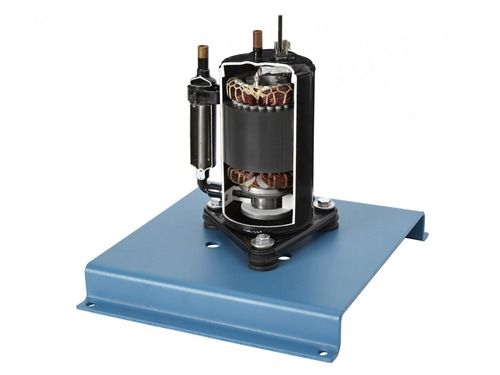

Price:
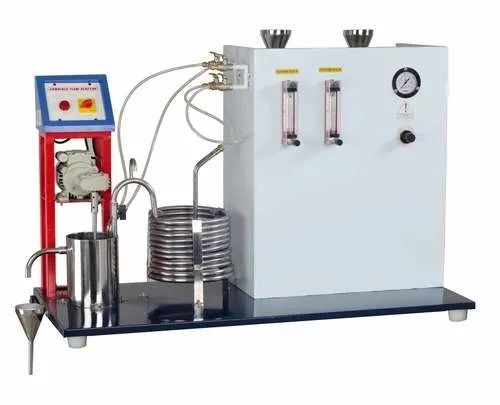
Price 163000.0 INR / Unit
Minimum Order Quantity : 1 Unit
Display Type : Digital LCD
Temperature : Room temperature to 50C
Port Size : 1/4 NPT
Features : Realtime monitoring, alarm system, adjustable parameters
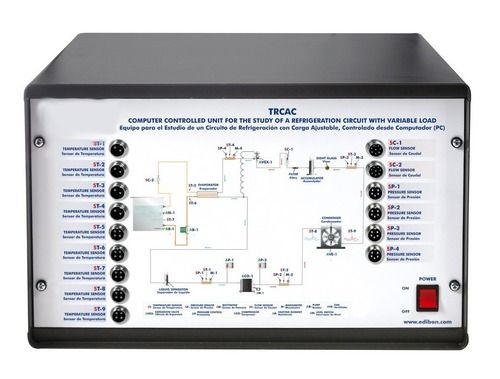
Price 353646 INR / Piece
Minimum Order Quantity : 01 Piece
Display Type : Digital display & PC graphical interface
Temperature : 0C to 50C (ambient), 20C to 20C (test chamber)
Port Size : 1/4 inch and 3/8 inch SAE flares
Features : Variable electronic load, real time data logging, safety protection, automated test sequences

Price 597375 INR / Piece
Minimum Order Quantity : 01 Piece
Display Type : Digital LCD display with computer interface
Temperature : Ambient to 70C
Port Size : 1/4 Inch BSP
Features : Fully automated, user friendly software, data acquisition, safety interlocks

Price 19915 INR / Piece
Minimum Order Quantity : 01 Piece
Display Type : Physical display/model
Temperature : Ambient
Port Size : Standard compressor port sizes (for demo only)
Features : Sectioned view, Detailed internal assembly, Paintcoated parts
GST : 06BBQPS9049P2ZF


 Send Inquiry

 Send Inquiry