About Research Polarimeter
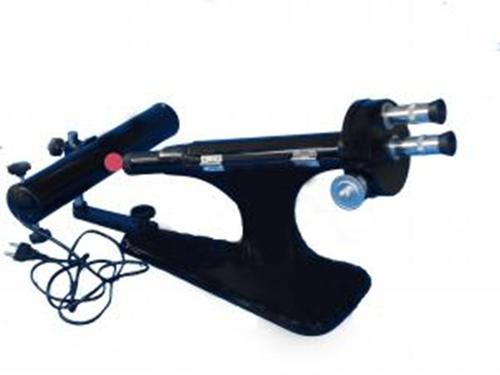
Research Polarimeter DDRI 188 (220mm) Used in medical, pharmaceutical and chemical research laboratories. Consist of a imported half shade Nicola polarizer, analyzer, 100mm. Diameter circular scale divided in degrees 0-360 Deg. x 1 Deg. And a sugar scale divided 30 Deg. To +130 Deg. X 1 Deg. ISS, a divided micrometer drum is given to read 0.05 Deg. (3minutes) and 0.1 Deg. ISS, the scale is properly illuminated for taking readings, the body is very sturdy and separate sodium lamp is stand is provided. Complete with Polarimeter tube, bubble traps at the center, 200 mm. Sodium lamps with stand and transformer Workable tube length 200mm
- Shade System : Laurent half shade device workable on sodium light source.
- Measuring Scale : 0 to 360 deg circular scale divided in single degrees every 10th
- Line numbered and every 5th line extended with 0.05 deg vernier reading.
- Sugar scale - 0 deg to 30 deg and +0 deg to 130 deg divided in single degrees every 10th line numbered and every 5th line extended.
- Body : Aluminum casted.
Precision Optical Measurement for LaboratoriesEngineered for researchers and laboratory professionals, this polarimeter provides accurate optical rotation analysis with a dual-scale analog display. Its stainless steel body and optical-grade glass ensure robust performance in demanding environments, while the anti-reflective coating enhances measurement clarity. Manual controls and easy calibration simplify operation, making it ideal for routine and advanced laboratory tasks.
Durable and Reliable ConstructionBuilt with corrosion-resistant stainless steel and polished optical glass, the device withstands laboratory conditions and repeated use. The 9 kg rectangular design offers stability on benchtops, and the equipment is rated to resist temperatures up to 50C. Maintenance is straightforward, with easy access for cleaning and calibration, ensuring consistent and long-lasting performance.
FAQs of Research Polarimeter:
Q: How is optical rotation measured using this research polarimeter?
A: Optical rotation is measured by placing the sample tube (200 mm length, 12 mm diameter) filled with the analyte into the device. The sodium lamp (589 nm) illuminates the sample, and the user manually adjusts the knob to align the polariscope on the dual scale, recording the rotation angle with 0.005 accuracy.
Q: What calibration process does the polarimeter utilize?
A: Calibration is performed using a quartz plate, as specified by the instruments design. This method ensures consistent accuracy and reliability. The process is manual and straightforward, allowing for quick recalibration between measurements.
Q: When should the polarimeter be recalibrated?
A: Recalibration should be conducted after changing samples, before starting a new set of analyses, or whenever the device is moved or cleaned. Regular calibration ensures precise results and maintains instrument integrity.
Q: Where can the research polarimeter be effectively utilized?
A: This device is ideal for analytical, scientific, and educational laboratories. It provides reliable performance in environments requiring precise optical rotation measurements, such as chemical, pharmaceutical, and food research facilities.
Q: What are the key benefits of using this polarimeter in laboratory research?
A: Benefits include high accuracy (0.005), durable stainless steel and optical glass construction, easy manual operation, and fast calibration. The anti-reflective lens and corrosion-resistant finish improve usability and lifespan, making it a valuable asset for research and analysis.
Q: What is the recommended power supply and voltage for operation?
A: The polarimeter operates on standard AC mains power, requiring 30 W and 220 V. This makes it compatible with most laboratory electrical setups in India and similar regions.

 Send Inquiry



 Send Inquiry

 Send Inquiry