About Poisson Ratio of Rubber Tube Apparatus For Physics Lab
PoissonRatioofRubberTubeApparatus:
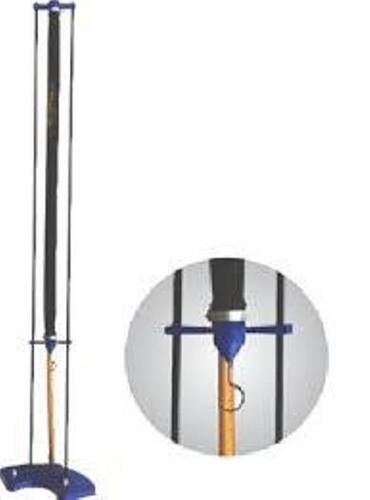
Consistofacyclerubbertubeof1mtr.lengthwithpointerslotedweighthanger,clampandrubberstopperonaCasteIronbase.
|
Cat. No.
|
Price
|
|
DDRI-294
|
1700.00
|
Purpose and ApplicationSpecially designed for demonstrating the elastic behaviour of rubber and calculating Poissons Ratio, the apparatus is ideal for school, college, and university laboratories. It gives students hands-on experience in measuring the deformation response of a rubber tube under axial load, essential for physics practicals covering the elastic properties of materials.
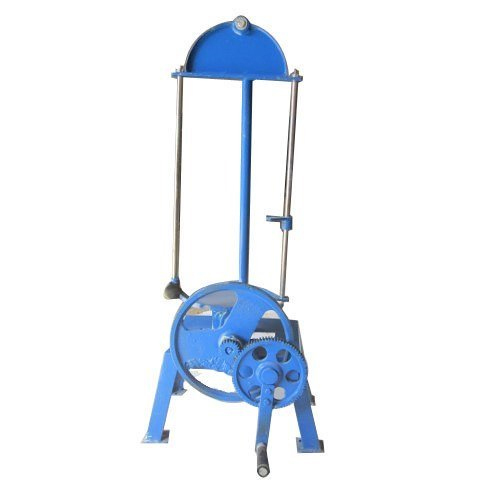
Construction and StabilityThe apparatus features a tabletop, rigid base for enhanced stability during use. Its frame is made from aluminum or steel for durability, and the rubber tubing is selected for consistent elastic response. All components can be easily assembled and secured, ensuring safety and ease of handling during experiments.
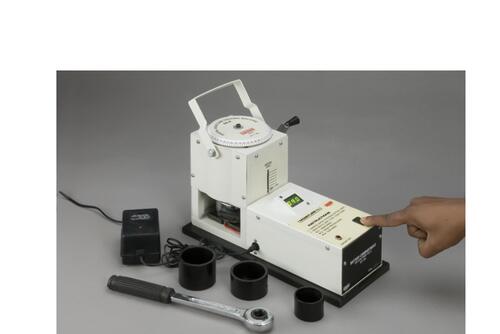
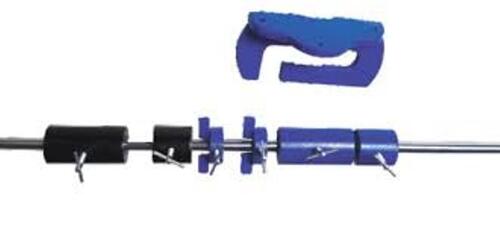
Measurement Precision and AccessoriesThe attached precision measuring scale offers readings accurate to 0.01 mm, with clear millimeter graduation for both lateral and longitudinal strain. A full set of standardized weights, pointers, and measuring rulers are included for smooth experimental procedures. The powder-coated finish ensures resistance to environmental wear.
FAQs of Poisson Ratio of Rubber Tube Apparatus For Physics Lab:
Q: How is the Poisson Ratio measured using this apparatus?
A: The Poisson Ratio is calculated by measuring the parallel (longitudinal) and perpendicular (lateral) deformation of the rubber tube when a known axial load is applied. The apparatus provides precise graduated scales for direct observation and calculation during laboratory experiments.
Q: What is the main usage of the Poisson Ratio of Rubber Tube Apparatus in a school or college physics lab?
A: This apparatus is primarily used to teach and demonstrate the elastic properties of materials, specifically Poissons Ratio, in student practical sessions. It facilitates hands-on experience in observing material deformation and reinforces theoretical concepts through applied measurement.
Q: When should this equipment be used during physics experiments?
A: The apparatus is most effective during experiments focused on elasticity, material science, and mechanics coursework. Use it when studying how materials respond to stress and strain, particularly when quantifying the relationship between longitudinal and lateral deformation.
Q: Where should the Poisson Ratio of Rubber Tube Apparatus be set up for optimal performance?
A: It is designed as a tabletop device and should be set up on a stable, flat laboratory workbench. Ensure that the base is secure before attaching weights or making measurements to maintain experimental accuracy and user safety.
Q: What is the process for conducting an experiment with this apparatus?
A: To use the apparatus, mount the rubber tube within the frame, attach the weights as directed, and use the pointers and graduated scales to record changes in length and diameter as the tube deforms. Repeat measurements can be taken across a range of loads to calculate Poissons Ratio.
Q: How do you maintain and clean the Poisson Ratio apparatus?
A: Maintenance is minimal. Simply wipe the apparatus with a damp cloth after use, ensuring all weights and components are dry before storage. Its powder-coated finish helps prevent corrosion, and all parts should be kept in the supplied sturdy card box for protection.
Q: What are the primary benefits of using this apparatus in laboratory education?
A: It provides accurate results (0.01 mm displacement), fosters deeper understanding of elasticity, and supports practical skills in measurement and data analysis. Its robust design and easy operation make it suitable for repeated use by students at various education levels.

 Send Inquiry



 Send Inquiry

 Send Inquiry