About Malaise Trap
Malaise Trap
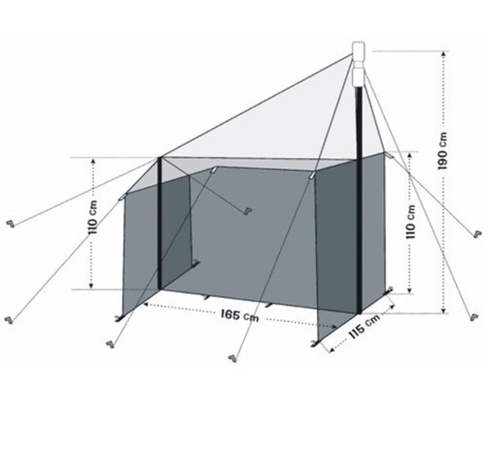
Designed to efficiently trap a wide range of flying insects. Black polyester no-see-um fabric (96 x 26 mesh / square inch) for interception area and white mesh fabric for canopy, catches minute insects, including parasitic wasps. The interception area, i.e., the central panel is 165x110cm. By placing collection tray underneath the interception area, it can be used as window trap to collect the insects/beetles which drop or fly down after hitting an obstruction. The trap is equipped with one 500ml collecting bottle with screw cap. Provided with tent pegs, guy ropes and support poles.
Efficient Field Survey ToolThe MalaiseTrap-STD is engineered for both professionals and academic researchers conducting biodiversity studies, insect monitoring, or entomological surveys. Its robust weather resistance and thoughtful design make it suitable for variable outdoor environments without compromising specimen integrity.
Quick and Straightforward SetupWith its manual assembly, the malaise trap can be installed and anchored in approximately 10 minutes. The included ground pegs, guy lines, and lightweight materials ensure stability and mobility, allowing users to reposition or transport the trap as needed with minimal effort.
Superior Insect Collection with Easy MaintenanceA fine 0.5 mm mesh netting efficiently retains a wide variety of flying insects, directing them into the clear, screw-threaded collection bottle for secure capture. All main components, including netting and collection chambers, are washable, ensuring sustained performance in long-term field operations.
FAQs of Malaise Trap:
Q: How is the MalaiseTrap-STD assembled and anchored in the field?
A: Assembly of the MalaiseTrap-STD typically takes about 10 minutes. The aluminium poles provide the frame, which is easily connected to the fine mesh netting. Ground pegs and guy lines are included for anchoring, ensuring stability during outdoor use.
Q: What is the primary application of this malaise trap in research?
A: This trap is commonly used for entomological research, biodiversity surveys, and routine insect monitoring in the field. It is suitable for academic, government, or ecological studies that require effective and non-destructive insect sampling.
Q: When should I use the MalaiseTrap-STD for optimal insect capture?
A: The trap operates effectively in various ambient outdoor conditions, making it ideal for use during active insect periods, typically from spring through autumn. Its UV-resistant materials ensure reliable performance even in direct sunlight.
Q: Where is the most appropriate setting to deploy the malaise trap?
A: It is best deployed in natural environments such as grasslands, forests, field edges, or near water bodies locations frequented by diverse flying insects. The portable design allows researchers to carry and set it up in remote or challenging terrains.
Q: What materials are used in the construction of this malaise trap?
A: The MalaiseTrap-STD features UV-resistant fine polyester mesh, sturdy yet lightweight aluminium poles, and a clear screw-threaded plastic collection bottle. All components are designed for durability and repeated outdoor use.
Q: How are collected insect specimens accessed and preserved?
A: Insects are guided into a transparent, screw-threaded bottle for secure collection. The design allows for easy removal and replacement of the bottle for specimen retrieval or preservation during field research.
Q: What are the main benefits of choosing the MalaiseTrap-STD?
A: Its lightweight, portable structure, quick manual setup, weather resistance, and washable components make it convenient and efficient for both short-term surveys and long-term monitoring initiatives in diverse field conditions.

 Send Inquiry



 Send Inquiry

 Send Inquiry