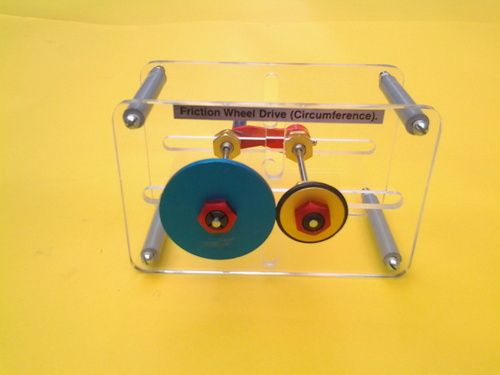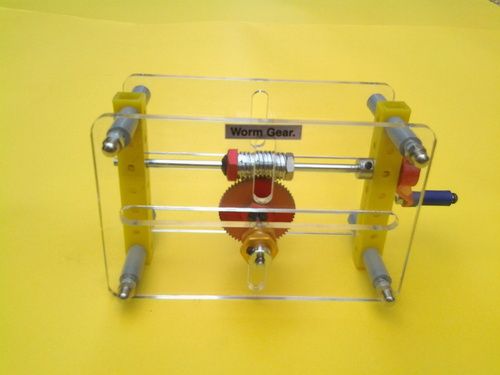
Friction Wheel Drive (Circumference) For Engineering Lab / School Lab Model

Friction Wheel Drive (Circumference) For Engineering Lab / School Lab Model

Price 1750 INR/ Piece

MOQ : 01 Piece

Friction Wheel Drive (Circumference) For Engineering Lab / School Lab Model Specification

  • Automation Grade
  • Manual
  • Temperature Range
  • Ambient
  • Warranty
  • 6 Months
  • Core Components
  • Friction Wheel Base Frame
  • Model No
  • Engineering-Lab-FWD-001
  • Voltage
  • None
  • Feature
  • Lab Model for demonstrating friction wheel drive mechanism
  • Power Source
  • None
  • Equipment Materials
  • Acrylic Metal Plastic
  • Type
  • Friction Wheel Drive Model
  • Usage
  • Engineering Lab / School Lab Demonstrations
  • Display Type
  • None
  • Dimension (L*W*H)
  • Approx. 20x15x10 cm
  • Weight
  • Approx. 2-3 kg


About Friction Wheel Drive (Circumference) For Engineering Lab / School Lab Model


This Engineering Lab Friction Wheel Drive (Circumference) Model (Model No: Engineering-Lab-FWD-001) is designed for manual usage in engineering and school lab demonstrations. Crafted from acrylic, metal, and plastic materials, this model showcases the friction wheel drive mechanism with its core component, the Friction Wheel Base Frame. Its compact dimensions of approximately 20x15x10 cm and lightweight of 2-3 kg make it portable and easy to handle. Operable at ambient temperatures, this model comes with a 6-month warranty and does not require any power source or voltage input. Ideal for educational purposes, it does not include a display type, serving as an essential tool for understanding friction wheel drives.

FAQs of Friction Wheel Drive (Circumference) For Engineering Lab / School Lab Model:


Q: What is the warranty period for this Engineering Lab Friction Wheel Drive model?

A: The warranty for this model is 6 months.

Q: Does this model require any power source for operation?

A: No, this model does not require any power source.

Q: What are the core components of this Friction Wheel Drive model?

A: The core component of this model is the Friction Wheel Base Frame.

Q: What are the materials used in the construction of this model?

A: This model is crafted from acrylic, metal, and plastic materials.

Q: Can this model be used in both engineering and school lab settings?

A: Yes, this model is suitable for demonstrations in both engineering and school labs.

Tell us about your requirement
product

Price:

Quantity
Select Unit

  • 50
  • 100
  • 200
  • 250
  • 500
  • 1000+
Additional detail
Mobile number

Email

More Products in Engineering Models Category

Two Phase Heat Transfer Unit For Engineering Lab / School Lab Model

Two Phase Heat Transfer Unit For Engineering Lab / School Lab Model

Minimum Order Quantity : 1 Piece

Core Components : Heat exchanger measuring instruments

Equipment Materials : Stainless steel durable plastics

Automation Grade : SemiAutomatic

Type : Educational laboratory equipment

Face Cam Drive (Double Sided) Trapped Followers For Engineering Lab / School Lab Model

Face Cam Drive (Double Sided) Trapped Followers For Engineering Lab / School Lab Model

Price 3000 INR / Piece

Minimum Order Quantity : 01 Piece

Core Components : Acrylic frame Face Cam Trapped Followers Supporting Rods

Equipment Materials : Acrylic frame Metal components

Automation Grade : Manual

Type : Face Cam Drive Model

Helical Gear For Engineering Lab / School Lab Model

Helical Gear For Engineering Lab / School Lab Model

Price 1800 INR / Piece

Minimum Order Quantity : 01 Piece

Core Components : Helical Gears Transparent Acrylic Frame

Equipment Materials : Acrylic Metal

Automation Grade : Manual

Type : Lab Equipment

Belt Drive - Multispeed For Engineering Lab / School Lab Model

Belt Drive - Multispeed For Engineering Lab / School Lab Model

Price 3000 INR / Piece

Minimum Order Quantity : 01 Piece

Core Components : Belts Pulleys Frame

Equipment Materials : Acrylic Plastic Metal

Automation Grade : Manual

Type : Engineering Lab Model


Back to top