About Automobile Ignition System Model For Mechanical Lab
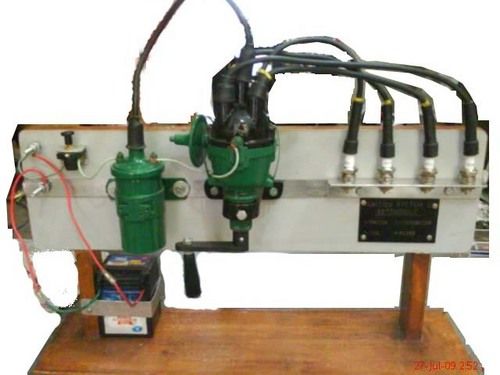
Automobile Ignition System Model :
We are offering Automobile Ignition System model. These models are used to check ignition systems as the ignition systems purpose is to deliver sufficient energy to the spark plug at the correct time during the compression stroke. The engine control unit (ECU) determines the operating condition of the engine from the sensor input listed below to determine which cylinder to fire and at what time.
Clear Demonstration of Ignition SystemsThis model allows mechanical engineering students and laboratory users to observe the functioning of an automobile ignition system closely. Clear and accurate demonstrations help deepen understanding and enable easy troubleshooting and teaching.
Practical and Convenient DesignWith manageable dimensions and a weight of about 8 kg, the model is highly portable and convenient for classroom or laboratory use. Its use of standard 220V AC mains ensures compatibility with Indian electrical infrastructure.
FAQs of Automobile Ignition System Model For Mechanical Lab:
Q: How is the Automobile Ignition System Model used in mechanical labs?
A: The model is primarily used to demonstrate and study the working principles of an automobile ignition system, helping students visualize its operation and understand key components during hands-on learning sessions in mechanical laboratories.
Q: What are the power requirements for operating this ignition system model?
A: The model operates on a standard 220V AC mains supply and consumes around 30W of power, making it suitable for most laboratory environments across India.
Q: When should the ignition system model be incorporated into mechanical lab training?
A: This model is best utilized during modules covering automotive engineering, electrical systems, or specifically ignition system studies, allowing students to gain practical exposure alongside theoretical learning.
Q: Where can this ignition system model be installed for demonstration purposes?
A: It can be installed on standard laboratory benches or demonstration tables due to its compact size (approx. 45 cm x 25 cm x 35 cm) and moderate weight, making it ideal for use in mechanical labs, workshops, or training institutes.
Q: What process does the model simulate?
A: The model simulates the ignition process found in automobiles, helping to demonstrate the sequence of operations that result in engine start, including voltage transformation and spark generation in ignition systems.
Q: What are the main benefits of using this model for educational purposes?
A: By providing a tangible representation of complex automotive concepts, the model enhances comprehension and retention, promotes practical skill development, and supports interactive learning for engineering students.

 Send Inquiry




 Send Inquiry

 Send Inquiry